

What Is Bulk Material Handling?

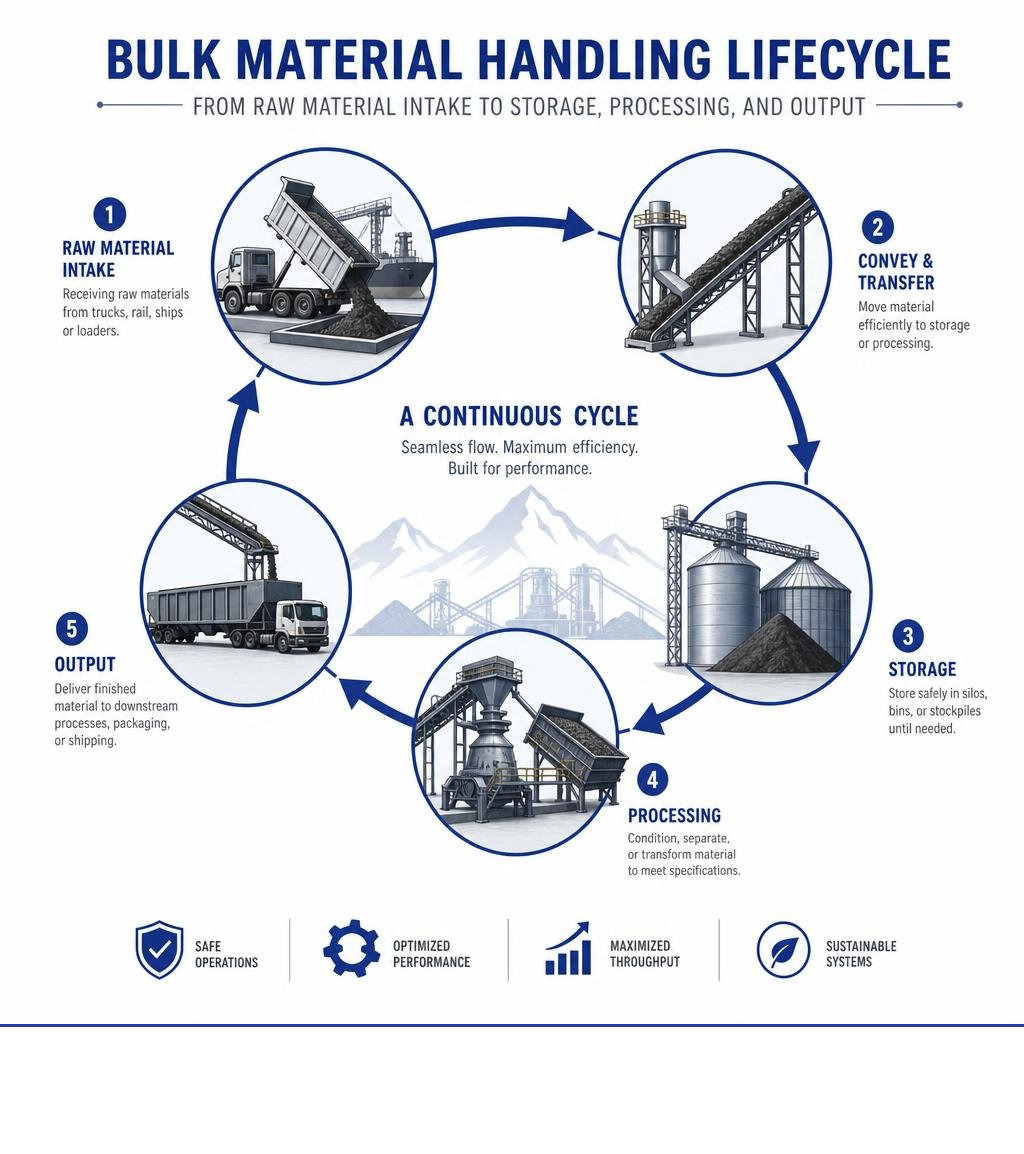
Bulk material handling refers to the systems and equipment used to move, store, load, convey, and control large quantities of loose materials such as powders, granules, pellets, grains, minerals, and other bulk solids. For warehouse, manufacturing, and distribution leaders, the key connection is how bulk material flow transitions into packaging, palletizing, warehouse storage, conveyor systems, and outbound distribution.
If you’re trying to get oriented fast, here’s the short version:
| Question | Quick Answer |
|---|---|
| What is it? | Systems and equipment for moving large volumes of loose, granular, or powdered materials |
| Who uses it? | Mining, agriculture, food processing, chemicals, cement, manufacturing, and logistics |
| Core equipment types | Conveyors, bucket elevators, silos, hoppers, feeders, crushers, screens, pneumatic systems |
| Key design drivers | Particle size, bulk density, moisture content, abrasiveness, throughput requirements |
| LD Systems connection | Packaging, palletizing, warehouse storage, conveyor flow, AS/RS, controls, and finished-goods distribution |
Nearly every physical product you use has passed through a bulk handling system at some point. The cotton in your furniture, the cement in your building, the grain in your food — all of it was conveyed, stored, and processed in bulk before it reached you.
For operations and engineering leaders, the challenge is not just choosing individual bulk material handling equipment. It is designing a system where receiving, conveying, loading, packaging, palletizing, storage, controls, and warehouse flow work together without creating bottlenecks, safety issues, or unnecessary downtime.
Bulk material handling systems move loose materials through processing and packaging, but the warehouse automation challenge often begins when those materials become bags, cases, totes, drums, or pallets that must be stored, conveyed, staged, and shipped efficiently.
This guide explains bulk material handling at a practical level, then focuses on how bulk operations connect to finished-goods movement, warehouse automation, and distribution flow.
Core Equipment and Systems in Bulk Material Handling
Every bulk material handling system is built from a specialized toolkit of machinery, but not every piece of equipment serves the same part of the operation. A more practical way to plan the system is to separate upstream bulk handling equipment from the downstream warehouse automation that takes over after loading, packaging, palletizing, or finished-goods handoff.
Bulk Material Handling Equipment Used Before Packaging
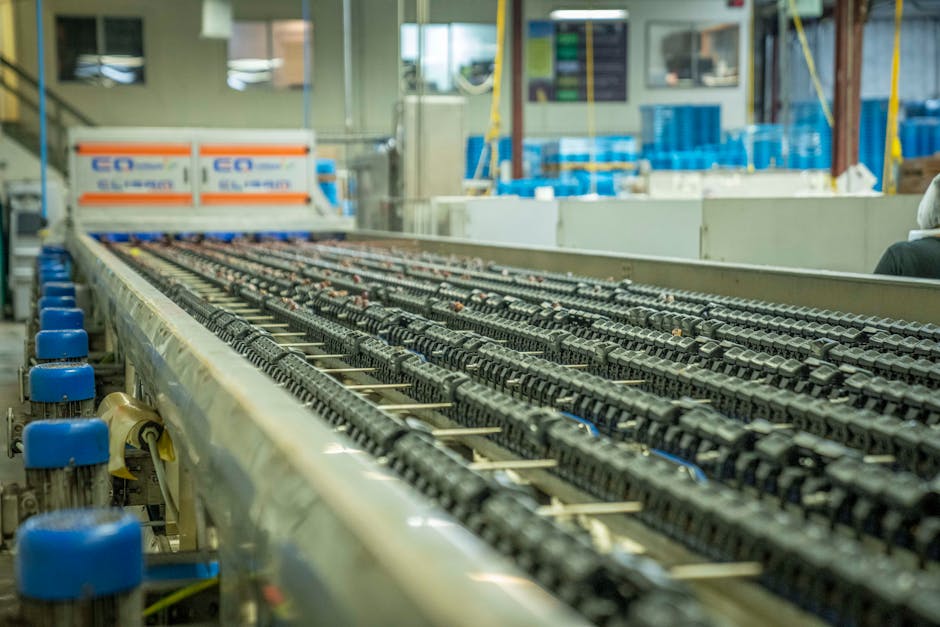
Raw bulk handling equipment moves, stores, meters, or loads loose material before it becomes a bag, case, tote, drum, or pallet. Common examples include:
- Belt Conveyors: Used to move loose bulk materials horizontally or on an incline between receiving, processing, storage, and loadout areas.
- Screw Conveyors: Used for controlled movement of powders, granules, and other bulk solids in enclosed or semi-enclosed paths.
- Bucket Elevators: Used for vertical lifting where loose materials must move upward between process levels.
- Pneumatic Conveyors: Used to move certain powders, pellets, or granular materials through enclosed piping with air pressure or vacuum.
- Silos, Bins, and Hoppers: Storage vessels that hold raw materials and intermediate goods before controlled discharge.
- Feeders: Devices such as vibratory feeders, screw feeders, or rotary valves that regulate the flow of material into downstream processes.
- Loadout Systems: Equipment used to transfer loose material into trucks, railcars, containers, bags, totes, drums, or downstream packaging equipment.
Upstream systems often require specialized process, safety, and material-flow expertise, especially when loose materials involve dust, moisture, abrasiveness, sanitation, or hazardous handling requirements.
Warehouse Automation After Bulk Loading or Packaging
LD Systems’ role becomes stronger once bulk material is loaded, packaged, palletized, or converted into finished units that must move through a warehouse or distribution environment. At that point, the focus shifts from loose material behavior to unit-load handling, storage, controls, and outbound flow.
Warehouse-side automation may include:
- Pallet conveyors for moving finished pallets away from packaging, palletizing, storage, or dock areas
- Palletizers that build pallet loads from bags, cases, cartons, or other packaged bulk goods
- Stretch wrapping to stabilize palletized loads before storage or shipment
- Label verification to support traceability, shipping accuracy, and downstream routing
- AS/RS for dense storage and controlled retrieval of palletized or unitized goods
- Pallet shuttle systems for high-density storage and automated pallet movement
- WMS, WCS, and WES coordination to connect warehouse software, controls logic, routing, storage, and execution priorities
- Dock staging and outbound flow to coordinate finished-goods movement with carrier schedules, shipping waves, and facility constraints
For operations teams, the downstream transition is especially important. Once materials are packaged, conveyor design shifts from bulk flow behavior to carton, tote, pallet, or drum handling: accumulation, sortation, staging, palletizing, AS/RS interfaces, dock flow, and controls sequencing.
For general conveyor terminology and material handling concepts, industry resources from MHI can provide neutral background without positioning LD Systems as a manufacturer of upstream bulk equipment.
How Material Characteristics Affect System Planning
Bulk material handling systems cannot be designed using a one-size-fits-all approach. The physical and chemical properties of the material influence upstream equipment choices, packaging requirements, dust control needs, and the way goods eventually move into warehouse automation.
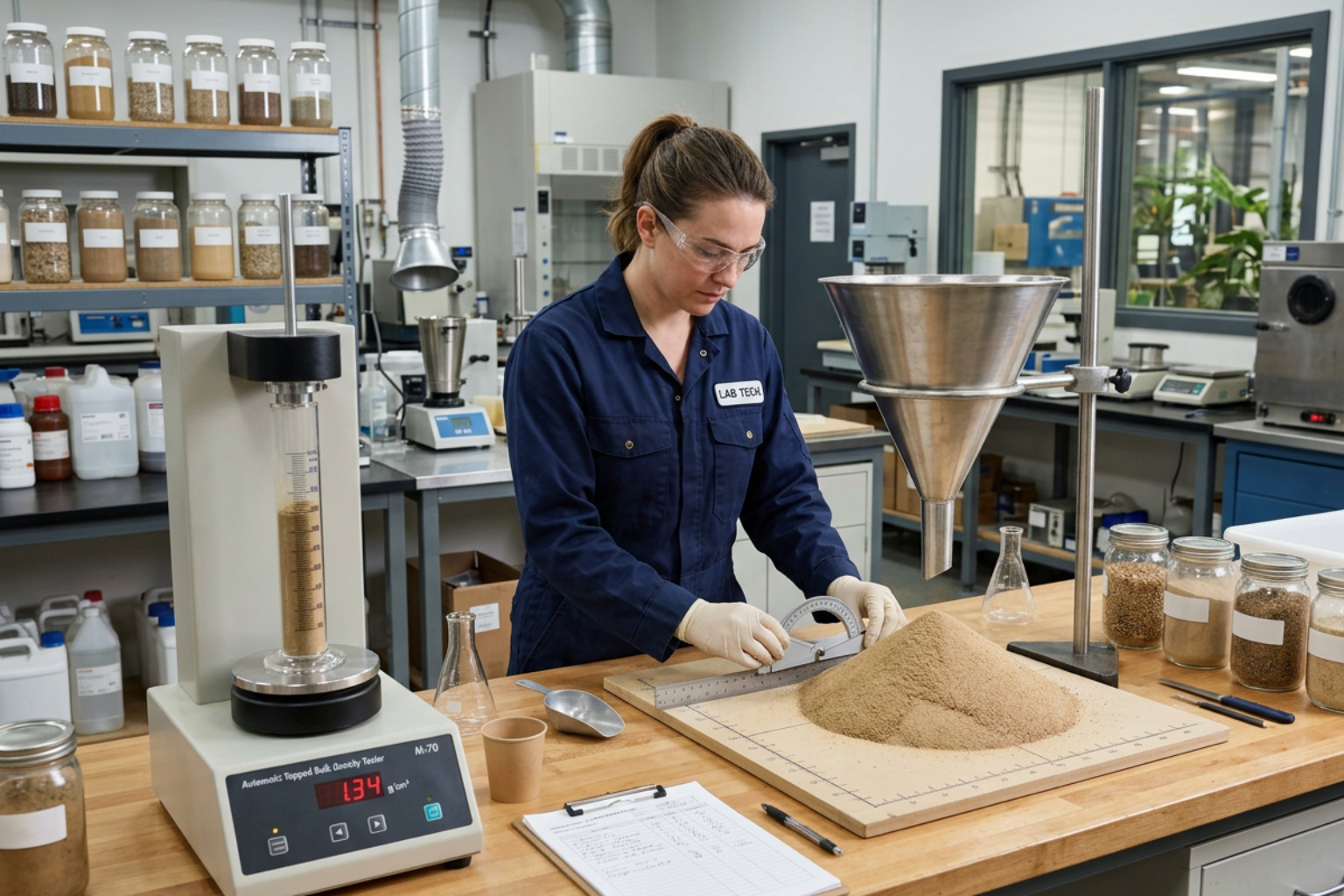
Key material properties that influence planning include:
- Particle Size and Distribution: Fine powders behave differently than large, irregular solids and may require different containment, conveying, or packaging approaches.
- Bulk Density: The weight of the material per unit volume affects storage, loading, package weight, pallet configuration, and equipment capacity.
- Abrasiveness: Abrasive materials can increase wear on upstream processing and conveying equipment, which may affect maintenance planning and throughput reliability.
- Moisture Content: Moisture can affect flow, packaging consistency, product quality, and the likelihood of buildup or dust.
- Flowability and Angle of Repose: Flow behavior affects discharge, filling, and packaging consistency before materials become unit loads.
LD Systems’ role is typically strongest once these upstream characteristics affect the downstream warehouse environment: how bags, cases, totes, drums, or pallets are conveyed, accumulated, palletized, stored, retrieved, staged, and shipped. A good automation plan accounts for the realities of the upstream bulk process while focusing warehouse automation design on the packaged or palletized goods that move into storage, staging, and distribution.
System Integration, Sizing, and Layout Design
During warehouse and facility assessments, engineers often find that operations struggle not because their individual machines are failing, but because those machines were never properly integrated. True efficiency comes from unified material flow, where upstream processes feed downstream systems reliably.
When upgrading or designing a bulk material handling system, several critical integration and sizing factors must be balanced:
- Throughput and Duty Cycle: Systems must be sized for actual plant demand, factoring in peak surges rather than just average hourly rates. The duty cycle — whether the system runs 8 hours a day or 24/7 — influences the equipment, controls, maintenance, and redundancy requirements.
- Layout and Footprint: Equipment must fit the physical constraints of the facility. Upstream bulk movement, packaging lines, palletizing, storage, staging, and dock flow all compete for space.
- Scalability: A well-designed system leaves physical space and control capacity for future expansion. This is especially important when packaged bulk goods must move from production handoff into automated warehouse systems.
For operations transitioning from bulk processing to downstream packaging and shipping, integrating bulk handling with warehouse automation can reduce handoff problems. Connecting packaged bulk goods with a comprehensive warehouse automation systems implementation guide helps teams think through what happens after materials are bagged, palletized, labeled, stored, and prepared for shipment.
For instance, high-throughput facilities often route palletized bulk goods directly into automated storage and retrieval systems (AS/RS) to improve storage density and reduce unnecessary forklift travel.
Bulk Loading, Packaging, and Warehouse Handoff
Bulk loading is the point where loose material is transferred into trucks, railcars, containers, totes, bags, drums, or downstream packaging equipment. In many facilities, this is the transition point between upstream bulk solids handling and downstream warehouse execution.
For warehouse operations, the critical question is what happens after loading or packaging: how finished units are palletized, conveyed, labeled, stored, staged, and shipped. A bulk loading system may fill a truck, railcar, container, tote, bag, or drum, but the warehouse-side challenge begins when the operation must move those finished units safely and consistently through the facility.
That handoff can affect:
- Palletizing strategy and load pattern requirements
- Conveyor routing from packaging or loadout areas
- Label verification and product identification
- Pallet handling, stretch wrapping, and quality checks
- Storage strategy, including rack, shuttle, or AS/RS options
- Staging logic for outbound orders, dock doors, and carrier cutoffs
- WMS, WCS, WES, PLC, and controls coordination
LD Systems supports the downstream warehouse automation that follows bulk loading, packaging, palletizing, and finished-goods handling, including pallet conveyors, storage systems, controls, software coordination, staging, and outbound flow.
Bulk Material Conveying vs. Packaged-Goods Conveying
Bulk material conveying moves loose material such as powders, granules, pellets, minerals, grains, or other bulk solids. Packaged-goods conveying moves finished bags, cases, cartons, totes, drums, or pallets. Many facilities need both, but the equipment, controls, safety considerations, and warehouse integration requirements are different.
Bulk material conveying is usually shaped by material behavior: particle size, bulk density, moisture, abrasiveness, dust, flowability, containment, and discharge consistency. Packaged-goods conveying is shaped by the unit being moved: package dimensions, pallet profile, weight, accumulation needs, routing logic, label visibility, equipment interfaces, and outbound sequencing.
That distinction matters for facilities that handle both upstream bulk flow and downstream warehouse movement. LD Systems’ conveyor and integration expertise is strongest on the warehouse and material handling side, where packaged or palletized goods must move through conveyor systems, pallet handling equipment, AS/RS interfaces, staging areas, and software-coordinated workflows.
Industry Applications and Unique Operational Challenges
Different sectors face vastly different challenges when handling bulk solids. A solution that works perfectly in a quarry would be a disaster in a food processing plant.
- Mining and Minerals: This sector requires heavy-duty, highly durable systems capable of handling high-tonnage, abrasive, and heavy materials. Common challenges include equipment wear, dust control at transfer points, and managing massive stockpiles.
- Food Processing: Sanitation is the primary concern. Systems must use food-grade materials (such as high-grade stainless steel), feature easy-to-clean designs to prevent cross-contamination, and avoid dead zones where food particles could accumulate and spoil.
- Chemicals: Chemical handling often requires precise dosing, sealed containment to prevent toxic dust exposure, and explosion-proof designs for combustible powders.
- Agriculture: Grains and seeds are fragile and can easily degrade during transport, which lowers their market value. Gentle handling systems, such as low-velocity pneumatic conveying or slow-speed continuous bucket elevators, are essential.
Once these bulk materials are processed and packaged into bags or cases, the material handling challenge shifts from bulk flow to unit load handling. Implementing robust pallet handling conveyor systems is critical for moving finished pallets of bulk goods to the warehouse.
Furthermore, operations must evaluate central and localized palletizing strategies to determine whether to palletize directly at individual packaging lines or route all finished bags via conveyors to a centralized palletizing zone.
Modern Technologies, Safety, and Compliance Considerations
Modern bulk material handling has evolved far beyond simple mechanical transport. Today’s facilities use automation, controls, monitoring, and safer material flow practices to improve reliability and reduce operational risk.
- Automation and Digital Monitoring: Sensors can monitor equipment status, conveyor conditions, line performance, and downstream flow in real time. This helps maintenance and operations teams identify issues before they disrupt packaging, palletizing, storage, or shipping.
- Dust Control and Environmental Protection: Dust can create housekeeping, product quality, environmental, and worker safety concerns. OSHA’s combustible dust guidance provides a useful safety reference for facilities where dust hazards may be present, while site-specific requirements still depend on the material, facility, jurisdiction, and process design.
- Energy-Efficient Designs: Conveyors, pallet handling systems, storage systems, and automated movement technologies should be evaluated for duty cycle, throughput, accumulation strategy, and operating cost.
- Controls and System Coordination: The most effective systems coordinate equipment, software, sensors, and decision logic so material does not simply move faster into the next bottleneck.
Facilities handling combustible dust, hazardous materials, food products, or chemicals should work with qualified safety, engineering, and compliance professionals. LD Systems can help evaluate warehouse-side automation, conveyor flow, pallet handling, storage, controls, and software coordination, but specialized process safety and compliance experts should address formal dust hazard analysis, explosion protection, food safety, chemical containment, and site-specific regulatory requirements.
When finished bulk products are packaged and ready for distribution, maintaining safety and throughput remains top of mind. Utilizing automated transport solutions, such as unlocking efficiency with pallet conveyors, helps move heavy pallets of bagged bulk materials through the warehouse more consistently while reducing unnecessary manual travel.
LD Systems Case Study Examples
Documented LD Systems case studies show how downstream warehouse automation can support facilities handling packaged bulk goods or high-volume finished products. In the Ocean Spray space utilization case study, LD Systems improved space utilization by 60%, enhanced productivity by 50%, and saved $11 million in new racking costs by repurposing and relocating existing racking.
In the WIX Filters distribution efficiency case study, LD Systems increased product facings by 400%, improved productivity by 60%, and reduced order cycle time by two-thirds. These examples show why bulk material handling strategies should not stop at processing or packaging; the warehouse system must also move, store, stage, and ship finished goods efficiently.
Frequently Asked Questions about Bulk Material Handling
What is the difference between individual bulk material handling equipment and integrated systems?
Individual equipment refers to standalone machinery designed to perform a single task, such as a conveyor, a vibratory feeder, or a storage silo. An integrated bulk material handling system is a unified network where multiple pieces of equipment are connected by controls, software, and operating logic.
An integrated approach helps material move from receiving, storage, processing, packaging, palletizing, and warehousing without creating unnecessary bottlenecks or manual handling touchpoints.
How do material properties affect the selection of bulk material handling systems?
Material properties are the primary driver of upstream system design. For example, bulk density can influence structural loads, drive sizing, package weight, and pallet configuration. High moisture content can make materials sticky and may require specialized discharge or cleaning approaches.
Abrasiveness can affect wear on upstream equipment, while flowability and angle of repose can influence chute, hopper, feeder, and packaging consistency. Once the material becomes a bag, case, tote, drum, or pallet, warehouse automation planning shifts toward load dimensions, weight, stability, label placement, routing logic, storage density, and outbound flow.
What key questions should buyers ask potential equipment suppliers?
When evaluating bulk material handling equipment suppliers, buyers should ask:
- What experience do you have handling our specific material under similar operating conditions?
- Can you provide material testing services to verify flowability, abrasiveness, moisture behavior, and bulk density?
- How does your equipment integrate with our existing controls, software, packaging systems, and downstream warehouse automation?
- What dust control, containment, sanitation, or safety features are built into the design, and which requirements require separate safety or compliance review?
- What are the long-term maintenance requirements, and what level of aftermarket support and parts availability do you provide?
How LD Systems Supports Bulk Material Flow After Packaging
Bulk material handling is essential to production, but LD Systems’ strongest value begins where bulk goods transition into packaged, palletized, stored, staged, and shipped products. Once loose materials become bags, cases, totes, drums, or pallets, the operational challenge shifts from bulk solids behavior to warehouse flow.
LD Systems helps facilities connect packaged bulk goods, pallet handling conveyors, warehouse storage, AS/RS, staging, controls, and warehouse software into a coordinated material flow from production handoff through storage and distribution.
LD Systems evaluates facility layout, throughput requirements, pallet profiles, storage density, software environment, and outbound shipping flow to design integrated systems that support packaged bulk goods through the warehouse.
Ready to connect bulk production with more efficient warehouse flow? Contact the team today to request a warehouse systems integration consultation.
