

Most conversations about Goods-to-Person technology start and end with productivity. Faster cycle times, higher throughput, better accuracy. And those benefits are real. But there’s another side of GTP that doesn’t get nearly enough attention, and for operations managers and business owners, it might actually matter more in the long run.
GTP technology doesn’t just make your warehouse more efficient. It actively protects the people working in it.
The physical demands placed on warehouse workers every single day, repeated over months and years, create a slow and steady accumulation of stress on the human body. Most of it never shows up as a single dramatic incident. It shows up as chronic back pain, worn-down joints, repetitive strain injuries, and workers who quietly leave the job because their body simply can’t keep up anymore. Goods-to-Person technology addresses this problem directly, by taking the most physically damaging tasks out of the worker’s hands altogether.
What Is Goods-to-Person Technology?

Goods-to-Person (GTP) is exactly what it sounds like: instead of workers traveling to retrieve inventory, the inventory is brought directly to the worker. Products are stored in an automated system, whether that’s a robotic storage unit, an automated storage and retrieval system (AS/RS), or a fleet of mobile robots, and delivered to a stationary workstation where the picker processes the order.
The worker stays in one place. The goods come to them.
This fundamental shift in how picking is structured is driving real improvements in speed, accuracy, and labor efficiency across warehouses of every size and vertical.
Without data, you might:
- Reassign staff without solving the root of the bottleneck
- Invest in equipment that doesn’t actually fix the issue
- Overlook safety hazards (potential OSHA violations) that appear only during peak hours
- Miss trends in order accuracy, inventory movement, or downtime
Developing a habit of decision-making without data can lead to long-term profit loss—and more importantly, a loss of trust within your workforce.
What a Typical Warehouse Shift Actually Does to the Body

In a traditional warehouse setup, the picker is the one doing the moving. They navigate aisles, locate items on sIn a conventional person-to-goods environment, workers are constantly moving. They walk 7 to 12 miles per shift navigating aisles. They bend, twist, and reach repeatedly to pull items from shelves at low, mid, and high positions. They carry product from picking zones to packing stations. They do all of this under time pressure, across an entire shift, day after day.
According to the Bureau of Labor Statistics, warehousing and storage consistently ranks among the industries with the highest rates of musculoskeletal injuries, including strains, sprains, and injuries to the back, shoulder, and knee. These aren’t accidents in the traditional sense. They’re the predictable result of asking human bodies to perform high-repetition, physically demanding work in environments that weren’t designed with ergonomics as a priority.
The problem compounds over time. A worker who starts experiencing lower back discomfort in their second year may be managing a chronic condition by year five. Turnover spikes. Workers’ comp claims accumulate. And the institutional knowledge those workers carried walks out the door with them.
How GTP Removes the Most Damaging Tasks from the Equation
Goods-to-Person technology fundamentally changes what warehouse workers are asked to do physically. Instead of workers moving through the facility to find product, automated systems bring the product to a stationary workstation. The worker stays in one place, at an ergonomically designed station, and processes orders as items are delivered to them.
That shift eliminates several of the most physically damaging activities in a traditional warehouse environment.
Repetitive long-distance walking. The miles logged per shift in a person-to-goods environment are not trivial. Chronic lower limb fatigue, plantar issues, and knee stress are common complaints among long-tenured warehouse workers. Stationary picking workstations in GTP setups remove this entirely.
Awkward reaching and bending. In a traditional racking environment, items are stored at varying heights, which means workers are constantly bending to floor-level shelves or reaching overhead throughout the day. Both positions, repeated hundreds of times, are significant contributors to shoulder and lower back injuries. AS/RS systems and vertical carousels present items at a consistent, ergonomically appropriate height, removing that variability entirely.
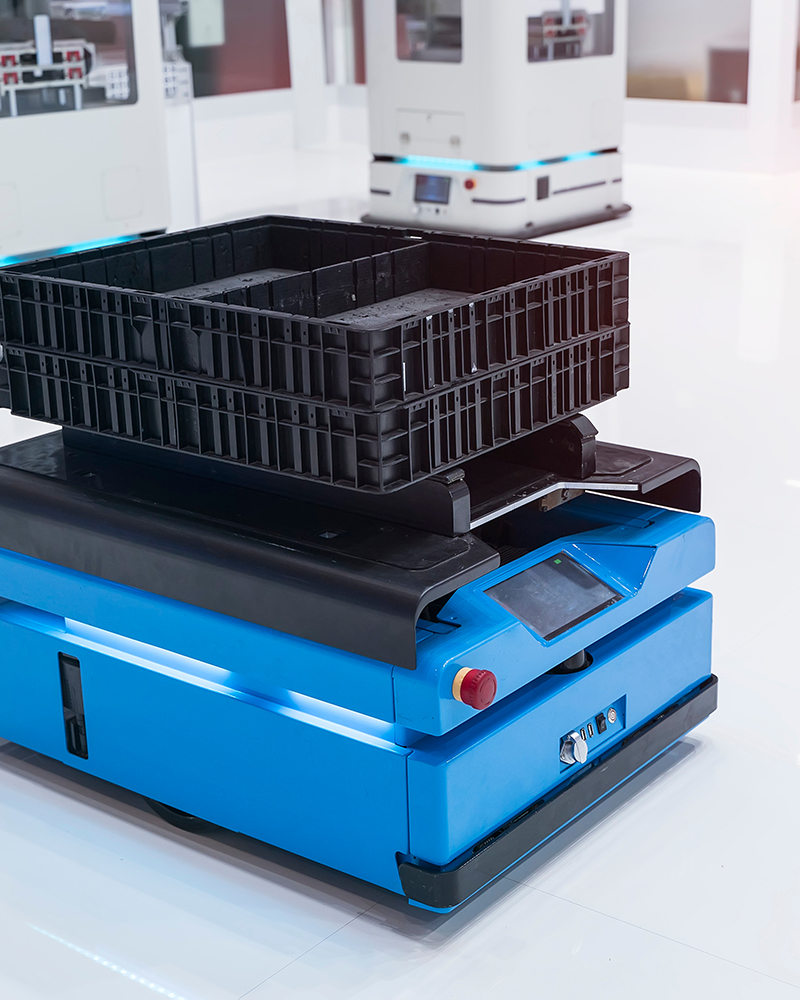
Manual transport of heavy or bulky product. Carrying product from picking to packing is a major source of strain injury, particularly for heavier items. Automated conveyor systems and AGVs handle product transport between zones, so workers aren’t absorbing that physical load shift after shift.
Navigating high-traffic and high-risk zones. In busy facilities, human workers sharing aisles with forklifts, pallet jacks, and other equipment is a consistent source of incident risk. Autonomous Mobile Robots equipped with obstacle detection and collision avoidance technology reduce the need for workers to operate in those mixed-traffic environments, lowering the risk of serious incidents significantly.
This Is an OSHA and Liability Conversation, Not Just a Wellness One
It’s worth being direct about the business implications here, because this goes beyond taking care of your people, though that matters too.
OSHA’s ergonomics guidelines specifically identify warehousing as a high-risk industry for musculoskeletal disorders (MSDs). Facilities with documented patterns of repetitive strain injuries, high incident rates, or workers’ compensation claims related to ergonomic conditions are increasingly finding themselves under scrutiny. The cost of a single serious injury claim, including medical expenses, lost productivity, replacement hiring, and potential regulatory penalties, can easily reach tens of thousands of dollars. A pattern of claims can reach far more.
GTP technology addresses ergonomic risk systematically rather than reactively. Instead of managing injuries after they happen, you’re designing a workflow where the most injurious tasks are handled by automated systems in the first place. That’s a fundamentally different posture, and it’s one that holds up well in both safety audits and insurance conversations.
The Retention Angle That Most Facilities Overlook
Warehouse turnover is a persistent, expensive problem. Industry-wide annual turnover rates have been reported as high as 35-40%, and the cost of replacing a single worker, accounting for recruiting, onboarding, and lost productivity during training, is significant.
A big driver of that turnover is physical burnout. Workers who feel like the job is wearing them down don’t stay. Workers who feel like the facility has invested in making their job safer and less physically punishing tend to stick around longer.
GTP technology is part of that investment. When you reduce the physical demands on your workforce through warehouse systems integration, you’re not just protecting bodies. You’re building an environment where people can actually sustain a career without paying for it physically. That has a direct impact on retention, and retention has a direct impact on your operational costs.
Where to Start
Transitioning to a Goods-to-Person model doesn’t require tearing out your entire operation overnight. For most facilities, it begins with a warehouse consulting assessment that identifies where your highest injury risk and highest labor burden overlap. Those are typically the best entry points for GTP technology, whether that’s an AS/RS for dense storage retrieval, AMRs for product transport, or a conveyor-based system to eliminate manual carry between zones.
At LD Systems, our team brings 50 years of combined integration experience to exactly this kind of evaluation. We’ve helped facilities across distribution, manufacturing, and e-commerce fulfillment reduce both injury rates and labor costs through thoughtfully integrated GTP solutions. The goal is never to implement technology for its own sake. It’s to build a smarter, safer operation that works better for the business and the people running it.
Protect Your People and Your Bottom Line

Your workforce is your operation. Protecting them from long-term physical harm isn’t just the right thing to do, it’s a sound business decision. GTP technology gives you a practical, proven way to do both.
📩 Contact LD Systems today for a free consultation and learn how Goods-to-Person technology can reduce injury risk and build a healthier, more sustainable operation.
