

Most warehouse and distribution center managers aren’t sitting around thinking about automation. They’re managing daily throughput, handling staffing gaps, putting out fires, and trying to hit fulfillment targets. The idea of evaluating and implementing a new technology system often gets pushed down the priority list because the current workflow is functional enough to keep going.
That’s exactly how facilities end up years behind where they should be operationally.
The truth is that Goods-to-Person technology isn’t just for large enterprise operations with unlimited capital budgets. It’s solving specific, identifiable problems that show up in facilities of all sizes, across multiple industries. And in many cases, the operations that need it most are the ones that haven’t considered it at all.
What Is Goods-to-Person Technology?
In short, GTP is a warehouse methodology where automated systems bring inventory directly to a stationary worker, rather than having workers walk the floor to find and retrieve product. It’s enabled by technologies like Automated Storage and Retrieval Systems (AS/RS), Autonomous Mobile Robots (AMRs), and Automated Guided Vehicles (AGVs).
For a full breakdown of how it works and what systems power it, read our detailed guide: What Is Goods-to-Person Technology and Why It’s Changing the Way Warehouses Operate.
Now, here are five operational scenarios that are a strong signal your facility should be having this conversation.
1. Your Labor Costs Keep Climbing but Throughput Isn’t Keeping Pace

If you’re adding headcount every time order volume increases but you’re not seeing a proportional improvement in throughput, that’s a direct sign that your process has a structural problem, not a staffing problem.
In a traditional person-to-goods environment, labor is the primary lever. More orders means more pickers. But each additional worker you add comes with recruiting costs, onboarding time, benefits, and the ongoing risk of turnover. And because manual picking is inherently limited by how fast a person can move through a facility, you hit a ceiling on what more people can accomplish.
GTP technology decouples throughput from headcount. When the retrieval and transport work is handled by automated systems, your existing workforce can process significantly more orders per shift. The Bureau of Labor Statistics consistently identifies warehousing as one of the highest-turnover industries in the country, which means the labor cost problem isn’t going away on its own. Facilities that reduce their dependency on pure headcount through warehouse systems integration are the ones that stop absorbing that cost cycle.
2. You’re Running Out of Floor Space but Still Have Unused Vertical Space
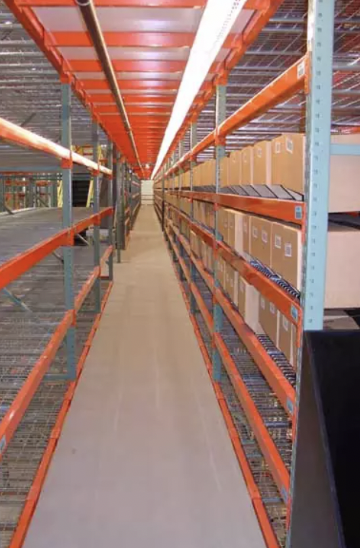
This is one of the most common and most overlooked scenarios in warehouse operations. A facility reaches what feels like maximum capacity, and the instinct is to look for a larger building or an additional location. Before that conversation happens, it’s worth asking: how high are your ceilings, and how much of that vertical space are you actually using?
Most traditional racking systems max out well below a facility’s ceiling height. The upper portion of the building, often a significant percentage of total cubic footage, sits completely unused.
AS/RS systems and vertical carousels are specifically designed to reclaim that space. By storing inventory in high-density vertical structures and using automated retrieval to bring items down to the worker, facilities can dramatically increase their effective storage capacity without adding square footage. For many operations, this eliminates the need for an expansion or a second facility entirely.
The Warehousing Education and Research Council (WERC) has long identified space utilization as one of the primary operational benchmarks for distribution center performance. If your facility is measuring poorly against that benchmark, vertical GTP storage is the most direct solution.
3. Your Error Rate or Return Rate Is Higher Than It Should Be

A mis-pick rate that seems small in percentage terms can translate into a significant cost problem at volume. A 1% error rate on 10,000 daily orders is 100 mistakes a day. Each one carries a downstream cost: return shipping, replacement fulfillment, customer service time, and the harder-to-quantify cost of customer trust.
Manual picking in busy aisles is inherently error-prone. Workers are navigating visually similar product, working under time pressure, and managing fatigue across a full shift. The conditions are not set up for consistent accuracy.
GTP systems remove most of the variables that cause mis-picks. Automated retrieval systems pull the exact item tied to the order. Stationary pick stations allow workers to focus entirely on the verification step rather than splitting attention between navigation, retrieval, and accuracy. Facilities running GTP workflows routinely report pick accuracy rates above 99.9%.
If your returns data or customer complaint patterns point to fulfillment errors as a recurring issue, that’s a direct signal that your picking process needs to be redesigned, not just managed more carefully.
4. Workplace Injuries and Workers’ Compensation Claims Are a Recurring Problem
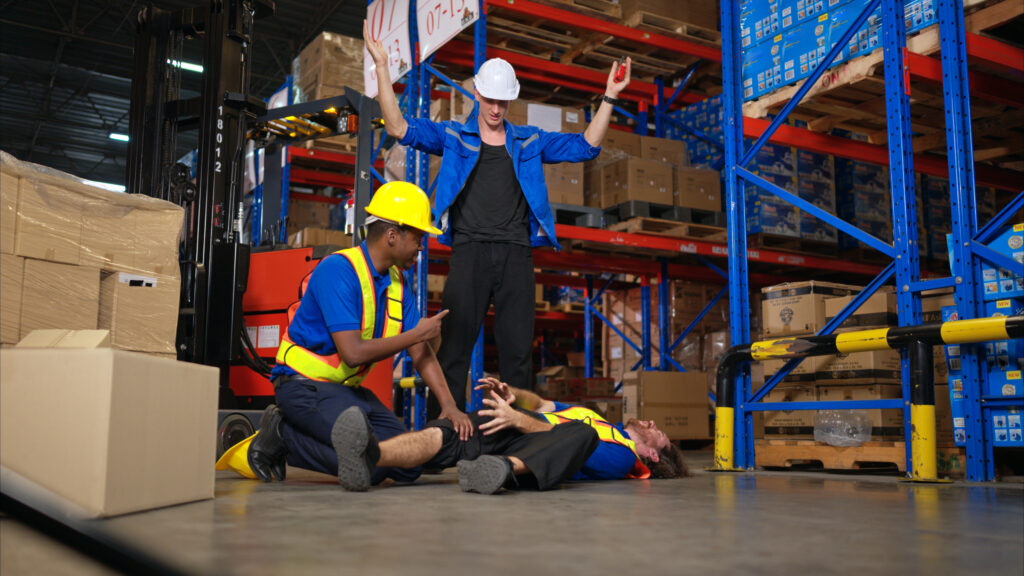
If your facility is experiencing a pattern of musculoskeletal injuries, repetitive strain claims, or high incident rates among picking and transport staff, the problem is almost certainly systemic. It’s not a training issue or an individual worker issue. It’s a workflow issue.
OSHA identifies warehousing as one of the industries at highest risk for ergonomic-related injuries, specifically the kind that come from repetitive bending, reaching, and carrying over long shifts. These injuries are largely predictable and largely preventable through workflow redesign.
GTP technology addresses this at the source. When AMRs and AGVs handle product transport and AS/RS systems present items at ergonomically appropriate heights, workers are no longer performing the movements that cause those injuries. The result is fewer claims, lower workers’ compensation costs, and a workforce that can sustain the job physically over the long term.
For a deeper look at this, read our post on how GTP technology protects your workforce from long-term physical harm.
5. Peak Season Consistently Overwhelms Your Operation

Every warehouse has some version of a peak season, whether that’s Q4 holiday volume, a product launch, a major promotional period, or seasonal demand in their specific vertical. And for a lot of facilities, peak season is when every weakness in the operation gets exposed at once.
Staffing up for peak is expensive and unreliable. Temporary workers need training. Error rates go up. Fatigue sets in faster. The facility that runs smoothly at baseline often struggles significantly under peak load because the manual workflow simply can’t scale fast enough to absorb the volume spike.
GTP systems are particularly well suited to handling variable demand. AMRs can be scaled up during high-demand periods and scaled back during slower periods without the hiring and training costs associated with temporary labor. Conveyor systems keep product moving through the facility at consistent throughput regardless of order volume. The operation doesn’t hit a wall when demand spikes because the automated systems are doing the heavy lifting.
If your peak season is a recurring crisis rather than a manageable surge, that’s a strong indicator that your baseline infrastructure needs to change.
What to Do If Any of These Sound Familiar
Recognizing one of these scenarios in your own operation doesn’t mean you need to overhaul everything at once. Most successful GTP implementations start with a focused warehouse consulting assessment that identifies where the highest pain and the highest opportunity overlap. That gives you a clear, prioritized roadmap rather than a vague directive to “automate more.”
At LD Systems, our team has worked through this process with hundreds of facilities across distribution, manufacturing, pharmaceutical, and e-commerce operations. We understand that every facility is different, and that the right GTP solution depends on your specific order profile, layout, SKU mix, and growth trajectory.
The facilities running the most efficient operations today didn’t get there by accident. They got there by asking the right questions at the right time and working with integration partners who knew how to turn the answers into a functional system.
Is Your Facility Showing Any of These Signs?
If one or more of these scenarios sounds like your operation, it’s worth having a conversation before the problem gets more expensive.
📩 Contact LD Systems today to schedule your free consultation and find out where GTP technology can make the biggest impact on your facility.