

What Is Transportation Management TMS?
Transportation management TMS refers to transportation management system software used to plan, execute, track, and optimize shipments across carriers, modes, and regions. For warehouse and distribution operations, the real value comes from how well the system connects transportation decisions with the software and controls managing orders, inventory, labor, equipment, dock doors, and material flow.
Here’s a quick answer if you’re short on time:
A Transportation Management System (TMS) is a software platform that helps businesses plan, execute, and optimize the physical movement of goods across carriers, modes, and regions. In a warehouse environment, its value depends on how well it exchanges data with WMS, WES, WCS, dock scheduling, conveyor, sortation, ERP, and order systems so picking, packing, staging, loading, and shipment confirmation stay aligned.
Transportation Management TMS at a Glance
| Transportation Management TMS at a Glance | Details |
|---|---|
| Purpose | Plan, execute, track, and optimize outbound and inbound shipments |
| Common functions | Carrier selection, route planning, tendering, shipment tracking, freight audit, documentation, and reporting |
| Warehouse connection | Coordinates with WMS, WES, WCS, dock scheduling, packing, staging, conveyor, sortation, and ERP/order systems |
| Best for | Warehouses, distribution centers, manufacturers, retailers, and fulfillment operations with complex shipping needs |
| Key integration risk | Poor data flow between warehouse systems and transportation systems can create staging, dock, carrier, and visibility problems |
As order volumes rise, customer expectations tighten, and freight costs fluctuate, manual transportation coordination can become difficult to scale. For warehouse and distribution operations, the larger opportunity is connecting transportation planning with real-time warehouse execution.
That is why a TMS should not be viewed only as a shipping tool. It becomes most valuable when it helps the warehouse decide what work should happen next: which orders need to be released, which cartons should move to which lanes, which pallets should be staged near which dock doors, and which carrier handoffs need attention.
What Does a Transportation Management System Do?
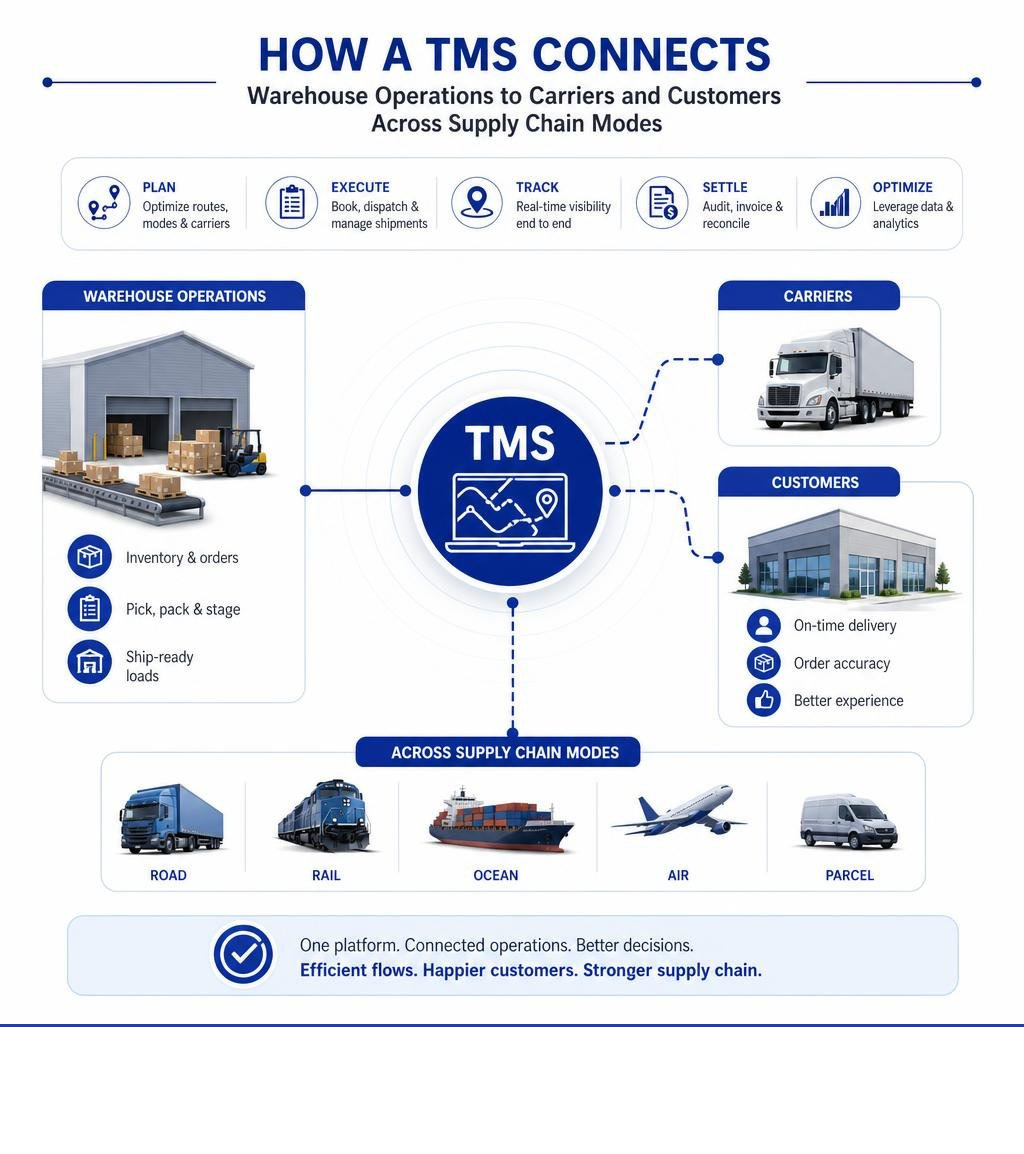
A transportation management system is a dedicated logistics platform designed to streamline the shipping process. It acts as a digital hub where shippers, carriers, and logistics providers coordinate the movement of physical goods. By utilizing digital connections to carrier networks, a TMS supports multimodal transport across road, rail, air, ocean, and parcel shipping modes.
According to the NMFTA logistics resources, a TMS plays a role in managing compliance and documentation. The system can support trade compliance checks, bills of lading, customs documentation for international trade, and shipment records. For warehouse operators, those transportation workflows are most useful when the required shipment data is accurate, timely, and connected to the systems managing inventory, cartons, pallets, dock doors, and outbound lanes.
Traditional logistics management relied heavily on manual spreadsheets, back-and-forth emails, and phone calls to secure carrier capacity and track shipments. This approach created operational bottlenecks. Shippers had limited visibility into carrier rates, pickup schedules, and shipment status. Once a shipment left the dock, tracking was often reactive and dependent on manual check-ins.
Modern transportation management systems replace many of these manual processes with automated data exchange. Instead of relying only on static route guides or manual coordination, a TMS can evaluate carrier options, planned transit times, and available capacity. But in a warehouse environment, the critical implementation question is whether that transportation plan is synchronized with what is actually happening on the floor: what has been picked, packed, sorted, staged, loaded, or delayed.
How Transportation Management TMS Connects with Warehouse Systems
For LD Systems’ audience, a TMS is not just a carrier-management topic. It is a warehouse integration topic. The system can only support reliable outbound execution when it shares the right data with WMS, WES, WCS, conveyor controls, sortation systems, dock scheduling tools, ERP platforms, and order systems.
In an integrated operation, carrier information does not sit outside the building. It helps drive warehouse execution decisions:
- WMS releases orders based on carrier cutoff times. Instead of releasing work only by order age or batch size, the WMS can prioritize orders that must be picked, packed, and staged before specific carrier pickup windows.
- WES sequences work by shipment priority. A WES can adjust labor, picking, replenishment, and packing queues based on shipment urgency, service level, dock schedule, and carrier arrival status.
- WCS routes cartons to the correct lanes. A WCS can direct cartons, totes, or pallets through conveyor and sortation equipment toward the right packing areas, shipping lanes, or dock-side staging locations.
- Conveyor and sortation systems support carrier-specific flow. Automated material handling equipment can help separate parcel, LTL, truckload, route-based, or customer-specific outbound streams when the software logic and physical layout are aligned.
- Dock scheduling reduces staging congestion. Pickup appointment data can help teams avoid staging freight too early, overloading dock areas, or sending completed loads to the wrong door.
- Carrier data helps prioritize picking, packing, and loading. Delayed trucks, early arrivals, missed tenders, and changed pickup times can all affect which work should move first inside the facility.
- Shipment confirmations flow back into ERP and order systems. Once goods are loaded and confirmed, shipment status, tracking data, and order updates should move back to the systems that support customer service, billing, inventory, and order visibility.
This is where transportation software becomes part of the broader warehouse systems architecture. The goal is not simply to install a TMS. The goal is to connect transportation planning with the physical movement of goods so orders move from release to pick, pack, sortation, staging, loading, and shipment confirmation with fewer gaps between systems.
WMS, WCS, WES, and TMS: Where Each System Fits
A Warehouse Management System (WMS) is designed to optimize processes inside the four walls of the facility, such as receiving, putaway, inventory tracking, and order fulfillment. A TMS manages the logistics outside the facility, including carrier selection, route optimization, shipment tracking, freight auditing, and delivery confirmation.
For automated distribution centers, coordination must also extend beyond the WMS to the physical material handling equipment. A Warehouse Control System (WCS) manages the real-time routing of cartons and pallets on conveyors, sorters, and automated storage and retrieval systems. A Warehouse Execution System (WES) helps orchestrate order picking, labor allocation, replenishment, packing, and work sequencing dynamically.
| System | Primary role | TMS integration point |
|---|---|---|
| WMS | Inventory, receiving, putaway, picking, packing, and shipping preparation | Shares order, inventory, carton, pallet, weight, dimension, and shipment-readiness data |
| WES | Labor orchestration, work sequencing, replenishment, picking, and packing priorities | Adjusts work queues based on carrier cutoffs, dock schedules, service levels, and shipment urgency |
| WCS | Real-time equipment control for conveyor, sortation, AS/RS, and routing logic | Routes cartons, totes, or pallets to the right lanes, staging areas, or dock-side destinations |
| TMS | Carrier selection, tendering, shipment planning, tracking, freight audit, and documentation | Sends transportation priorities and receives warehouse execution confirmations |
When these systems are integrated, they share data to synchronize physical material flow with carrier arrival schedules. The WMS can release orders for picking based on carrier pickup times scheduled in the TMS. The TMS can use weight, dimensional, carton, pallet, and inventory data from warehouse systems to support more accurate load planning and documentation. Dock-door scheduling can connect carrier pickup appointments with staging location, load readiness, door availability, and trailer activity so teams can reduce unnecessary travel and congestion.
This need for connected logistics data is also reflected in the Bureau of Transportation Statistics’ Freight Logistics Optimization Works program, a public-private initiative designed to build a more integrated view of U.S. supply chain conditions. While FLOW focuses on broader freight visibility rather than warehouse software implementation, it reinforces the same operational principle: transportation decisions improve when logistics participants can share timely, usable data across the supply chain.
To achieve this level of operational cohesion, many businesses rely on warehouse systems integration services to connect their software platforms, ensuring that data flows smoothly between inventory management, order processing, and transportation dispatch.
Understanding how coordinating warehouse control, warehouse management, and warehouse execution systems keeps operations fluid is essential for any facility looking to maximize its automation investments.
How TMS Integration Improves Dock, Staging, and Shipping Flow
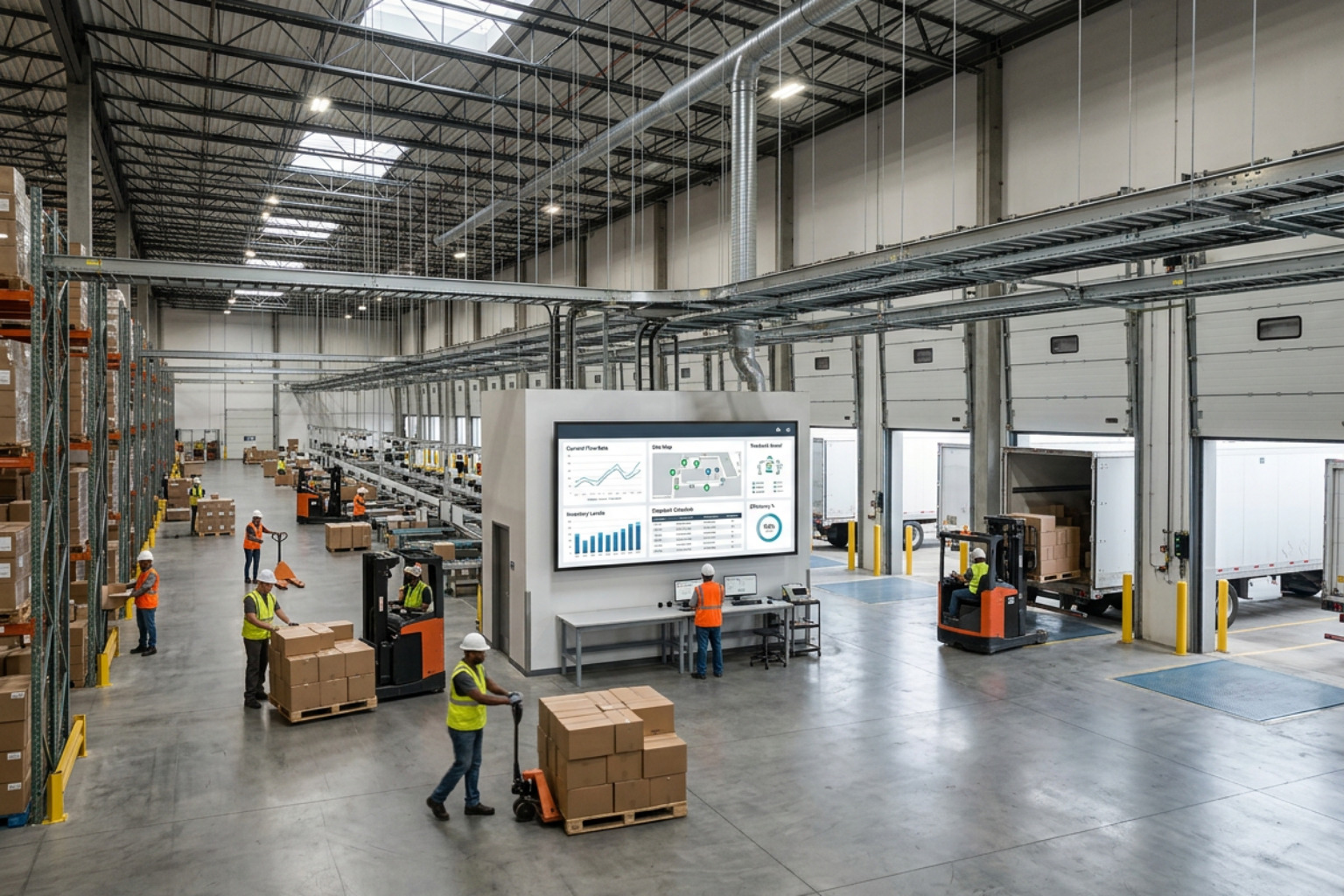
In many distribution operations, a disconnect exists between warehouse activities and outbound transportation. When the warehouse team and the transportation team operate in silos, it can lead to staging orders too early, crowding outbound lanes, or having carriers wait at dock doors because orders are not yet packed.
Bridging this gap requires deep integration between the warehouse software stack and the transportation management system. Operations can achieve this synchronization by working with a systems integrator to connect these platforms, define transaction rules, validate data quality, and align software workflows with the facility’s physical material flow.
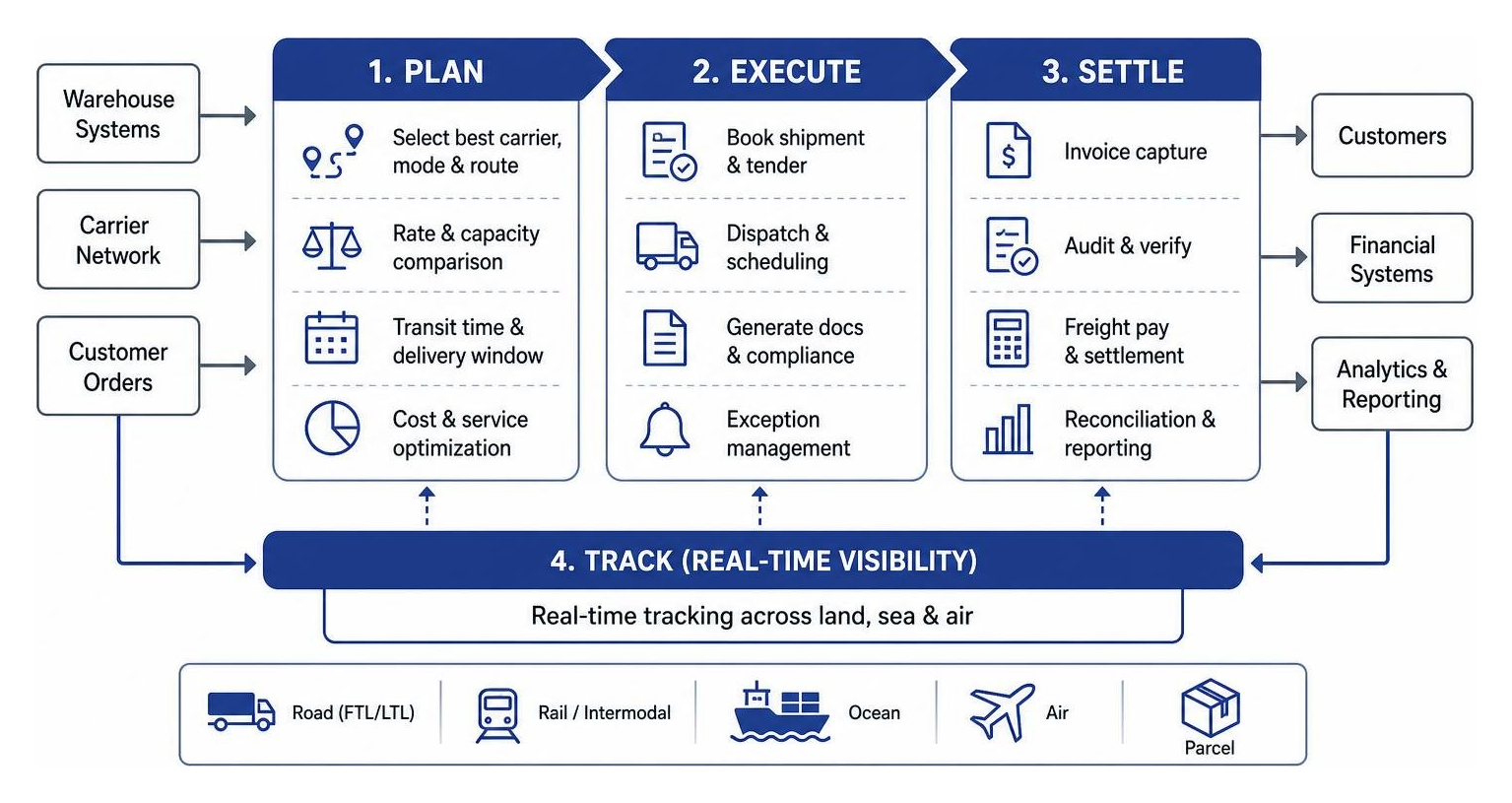
A TMS can evaluate the order pool, delivery windows, carrier rules, service levels, freight costs, and equipment constraints to recommend how shipments should move. For warehouse teams, the important output is not just the transportation plan. It is the data that tells the facility which orders need to be released, picked, packed, palletized, and staged first so outbound work aligns with carrier pickup times.
After shipments are planned, the TMS can support carrier tendering, dispatch communication, shipping labels, bills of lading, and other shipment documents. These steps are often handled through EDI, APIs, carrier portals, or direct system integrations.
Inside the warehouse, those execution steps should stay synchronized with packing confirmation, load building, trailer loading, and dock-door activity. If transportation updates and warehouse events fall out of sync, teams can face missed pickups, carrier wait time, staging congestion, or manual rework.
A TMS can also provide status updates, pickup confirmations, exception alerts, and shipment visibility after goods leave the dock. That visibility is most useful when it reflects the same operational reality shown in the warehouse systems. For example, if a carrier is delayed, the connected WMS, WES, or WCS may need to adjust pick priorities, staging lanes, or conveyor routing. If an order is packed late, the TMS may need updated pickup or tendering information.
By coordinating WCS, WES, and TMS platforms, an operation can improve end-to-end throughput control. For example, if a TMS reports that a specific carrier’s truck is delayed by two hours, the WES can deprioritize those orders on the picking floor and redirect labor to pack orders for a carrier that is arriving on time. Similarly, the WCS can route completed cartons to specific shipping lanes on a conveyor system based on real-time carrier assignments provided by the TMS.
ROI depends on freight volume, carrier mix, current manual workload, data quality, system integration, and how well transportation planning coordinates with warehouse execution. For warehouse operations, the strongest returns often come from reducing dock delays, improving order release timing, preventing staging congestion, improving shipment visibility, and reducing manual coordination between warehouse and transportation teams. Operations can identify where these cost-saving opportunities exist by uncovering hidden waste through warehouse data analysis.
TMS Selection Factors That Affect Warehouse Integration
When evaluating transportation software in a warehouse environment, the most important question is not simply whether the platform is cloud-based or on-premise. The more practical question is whether it can exchange clean, timely, usable data with the systems that control order release, picking, packing, staging, dock activity, and shipment confirmation.
A TMS selection process should therefore focus on integration requirements that affect warehouse execution:
| Integration factor | Why it matters for warehouse operations |
|---|---|
| API and EDI support | Determines how reliably shipment plans, tenders, labels, status updates, and confirmations can move between the TMS, ERP, WMS, carriers, and other systems |
| WMS, WES, and WCS compatibility | Helps transportation priorities align with order release, work sequencing, conveyor routing, sortation, staging, and load confirmation |
| Carrier data quality | Affects pickup times, service levels, rate data, tracking events, appointment accuracy, and exception handling |
| Real-time status updates | Allows warehouse teams to adjust priorities when carriers arrive early, run late, reject tenders, or change pickup requirements |
| Dock scheduling integration | Helps connect carrier appointments with door assignments, staging locations, load readiness, and trailer activity |
| Parcel and LTL support | Ensures the system can support the shipping modes that commonly drive packing, labeling, sortation, and outbound lane decisions |
| Implementation and testing requirements | Reduces go-live risk by validating transaction rules, data fields, exception paths, labels, documents, and end-to-end order-to-ship workflows before launch |
Cloud-based platforms may simplify updates, connectivity, and carrier network access, while on-premise or legacy environments may require more middleware, EDI mapping, or custom interfaces. Either model can create operational problems if the project team does not define ownership of shipment data, test warehouse-to-transportation workflows, and confirm that system events match the facility’s physical material flow.
For automated or high-volume distribution centers, the strongest TMS choice is usually the one that fits the broader warehouse systems architecture. The platform should support the data exchanges needed for WMS, WES, WCS, dock scheduling, parcel, LTL, carrier visibility, and ERP/order updates without forcing warehouse teams into manual workarounds.
Operations leaders can ensure a successful deployment by relying on structured project management services to keep timelines, budgets, and technical requirements on track throughout the implementation lifecycle.
Common TMS and Warehouse Integration Mistakes
The primary risk during implementation is poor integration with existing software systems. If the TMS cannot communicate reliably with your WMS, WES, WCS, ERP, dock scheduling, or carrier systems, it can lead to data discrepancies, delayed shipments, and operational confusion.
Common mistakes include:
- Treating the TMS as a transportation-only project. Warehouse operations, IT, automation, customer service, and finance teams should be involved because shipment data affects order release, packing, staging, billing, and customer visibility.
- Ignoring data quality before implementation. Weight, dimensions, addresses, carton data, pallet data, service levels, carrier rules, and inventory records need to be accurate enough to support shipment planning and documentation.
- Under-testing exception paths. Projects often test the ideal order-to-ship flow but miss delayed carriers, rejected tenders, split shipments, short picks, label failures, late packing, or dock-door changes.
- Failing to align software logic with physical flow. A routing rule may look correct in the system but still create congestion if staging lanes, sortation destinations, dock doors, or labor workflows are not considered.
- Overlooking ownership of status updates. Teams need clear rules for which system owns shipment readiness, load confirmation, carrier arrival, pickup completion, tracking updates, and order status.
To mitigate these risks, project teams should prioritize data quality during the planning phase and include rigorous testing phases, including end-to-end integration testing using simulated orders. This helps confirm that EDI connections, API integrations, middleware, custom interfaces, and automated workflows operate correctly before the system goes live.
Frequently Asked Questions About Transportation Management Systems
What is a TMS system?
A TMS system, more accurately called a transportation management system, is software that helps plan, execute, track, and optimize shipments. The phrase “TMS system” is redundant because TMS already stands for transportation management system, but many teams still use it as shorthand when discussing shipping and logistics software.
How does a transportation management system work?
A transportation management system works by connecting shipment data, carrier options, service requirements, rates, tendering workflows, tracking events, and documentation in one platform. In a warehouse environment, it should also exchange data with WMS, WES, WCS, ERP, dock scheduling, packing, staging, and order systems so warehouse execution stays aligned with carrier pickup times and shipment requirements.
What is the difference between a WMS and a TMS?
A Warehouse Management System (WMS) is designed to manage and optimize operations inside the physical walls of a warehouse or distribution center. This includes receiving inventory, putaway, inventory tracking, picking, packing, and shipping preparation.
A Transportation Management System (TMS) manages the logistics of moving those goods outside the warehouse. It handles carrier selection, route optimization, shipment tracking, freight auditing, and delivery confirmation. While a WMS manages inventory and labor inside the facility, a TMS manages the carriers and material flow between facilities and customers.
How does a TMS improve sustainability in logistics?
A TMS can support sustainability by improving load planning, reducing empty miles, consolidating shipments, and helping teams choose more efficient routes or carrier options. The actual impact depends on freight volume, carrier data quality, shipment mix, routing constraints, and whether the organization has reliable sustainability reporting in place.
Can midsize operations benefit from a modern TMS?
Yes. Cloud-based and modular platforms have made transportation management technology more accessible for midsize operations than many legacy, highly customized systems.
Midsize businesses with enough shipment complexity can use a TMS to automate carrier selection, improve tracking visibility, support freight audit workflows, and reduce manual coordination. The business case depends on freight spend, shipment volume, carrier mix, internal workload, and integration needs.
How LD Systems Supports Warehouse and TMS Integration Planning
Implementing a transportation management system is only one part of building a high-performing supply chain. To improve throughput, labor efficiency, and operational agility, the software must be integrated with your physical warehouse layout, material handling equipment, and automation controls.
LD Systems is a technology-agnostic warehouse systems integrator specializing in designing, engineering, and integrating complete automation systems for distribution centers, warehouses, and manufacturing facilities across the United States and Canada. Based in Daytona Beach, Florida, the LD Systems team brings more than 50 years of combined experience to help organizations evaluate operational bottlenecks, design customized automation strategies, and implement scalable warehouse systems.
Rather than selling individual pieces of software or machinery, LD Systems acts as an engineering partner. They evaluate your facility’s unique SKU profiles, throughput goals, and physical constraints to design a unified material flow solution.
Whether your operation needs better coordination between warehouse software, outbound sortation, carrier cutoffs, dock staging, or shipping workflows, LD Systems can help evaluate the warehouse-side integration requirements that allow transportation and facility execution to work together.
Are you ready to reduce operational bottlenecks and design a scalable, integrated distribution network? Take the first step by requesting a consultation with the LD Systems engineering team to discuss your operational goals and discover how a unified automation strategy can support measurable ROI for your business.
